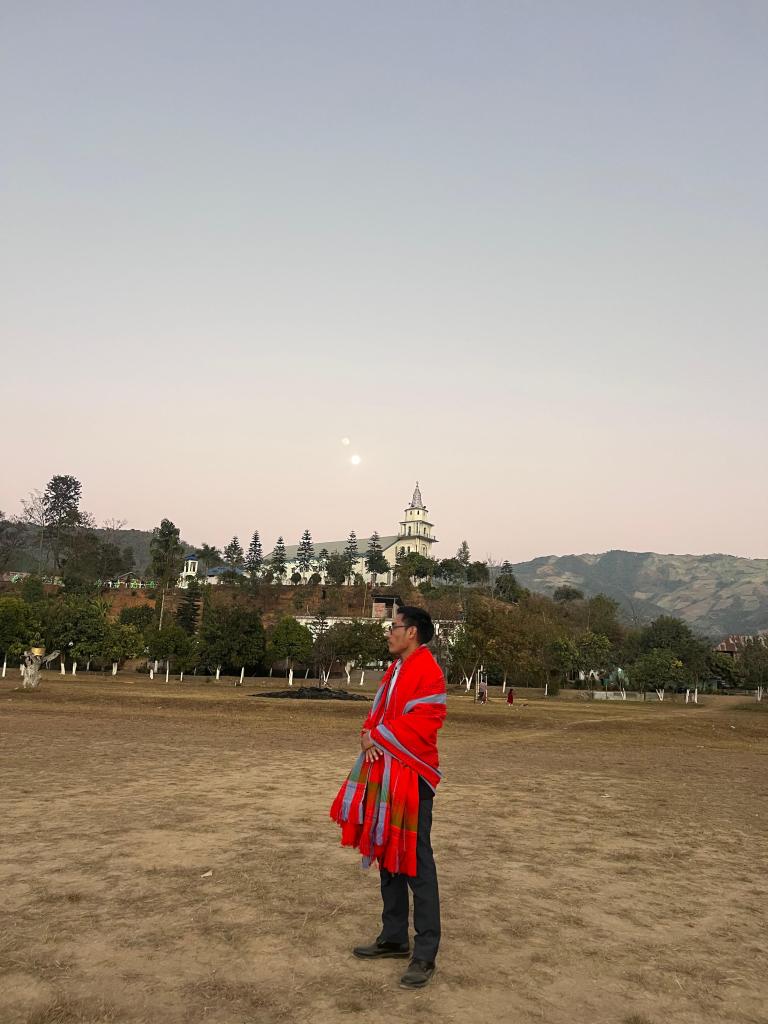
The church behind us stands tall—symbol of faith, hope, and the dreams our forefathers built. Yet even as we smile for the photograph, there is an ache deep within the heart. Because beyond that calm façade, hidden just behind the steeple and the hills, lies a harder truth: the creeping spread of poppy plantations that threaten the very life of our village.
We all know the problems exist, but very few dare speak them aloud.
The background behind the church is not just land—it is our future, our children’s inheritance, and the health of our people. Those poppy fields, besides being illegal, carry poisons deeper than we care to admit. The chemicals and fertilizers used seep silently into the soil and drain into the smallest first-order streams. These streams are the delicate veins of the land, flowing down into the larger Ihang river – the same waters that women draw to cook, families drink from, and livestock depend on.
One field at a time, one season at a time, we are poisoning our own lifeline.
And when years pass and someone asks, “Why are cancers rising?”
or
“Why are strange illnesses suddenly common?”
Don’t let anyone pretend they do not know.
This is not just a law-and-order issue.
This is ecology, economy, culture, morality and survival itself.
When the land is sick, the people cannot remain healthy.
So the question we must ask is not whether we care about the problem—it is whether we care enough to act.
A photograph captures a moment.
But every choice we make writes our future.
 Hao Tangkhul
Leave a comment